
Engineering
Controls Software
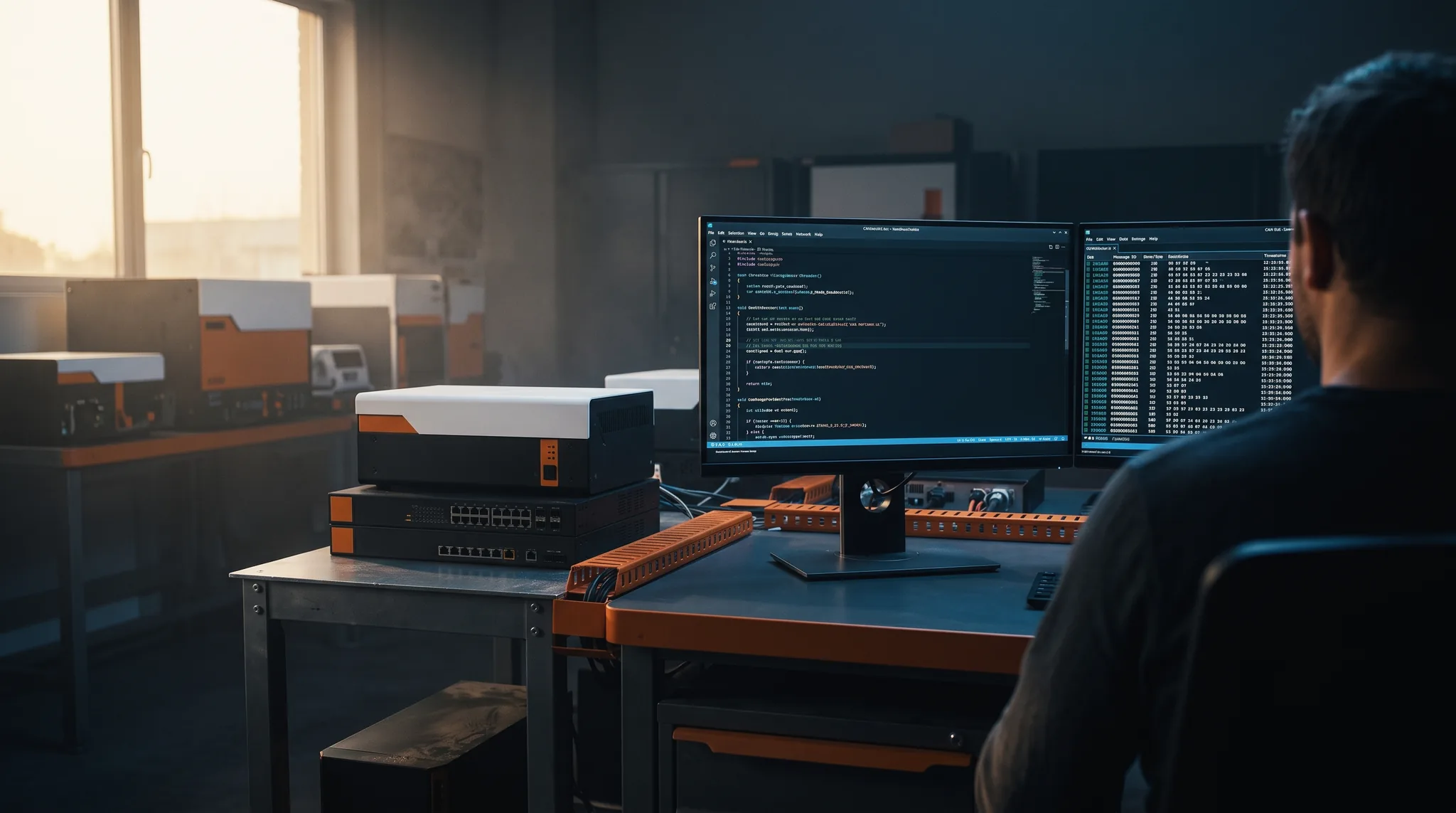
Envoltz manages embedded software like a software product: one protocol standard, auditable testing, versioned releases across a deployed fleet.
One protocol, not per-project wiring
Envoltz writes a product-line CAN protocol standard. One master controller implementation drives a 14 kW marine unit and a several-hundred-kilowatt unit unmodified. Commands are issued in physical engineering units, and generators publish their own capability on the bus, so a new module joins the system by declaring what it can do, not by someone re-mapping frames.
That is what platform thinking looks like in embedded controls: the protocol is the product, and each machine is an instance of it.
A full software engineering lifecycle
1
Requirements
Numbered, testable software requirements with defined verification methods. Every behavior the system promises is written down before it is written in C.
2
Architecture
A documented module architecture over a thin platform layer, so control logic is portable across controller hardware generations.
3
Software-in-the-loop
The control modules compile and run on a PC, without hardware, against scripted scenarios with pass/fail assertions tied to requirement IDs. Test coverage is auditable, not anecdotal.
4
Safety case
Faults are classified, reactions are documented, and independent barriers back up the software. What happens when something breaks is a design input, not a discovery.
5
Release
Shipped, versioned firmware with published release notes across the deployed fleet, tracking controller and display versions over successive releases.
Production C, on the record
The platform migrated deliberately from graphical control programming to production C on an automotive-grade controller. That decision is documented, and the deployed fleet has been carried through it with versioned releases rather than forked one-offs.
Our own electronics
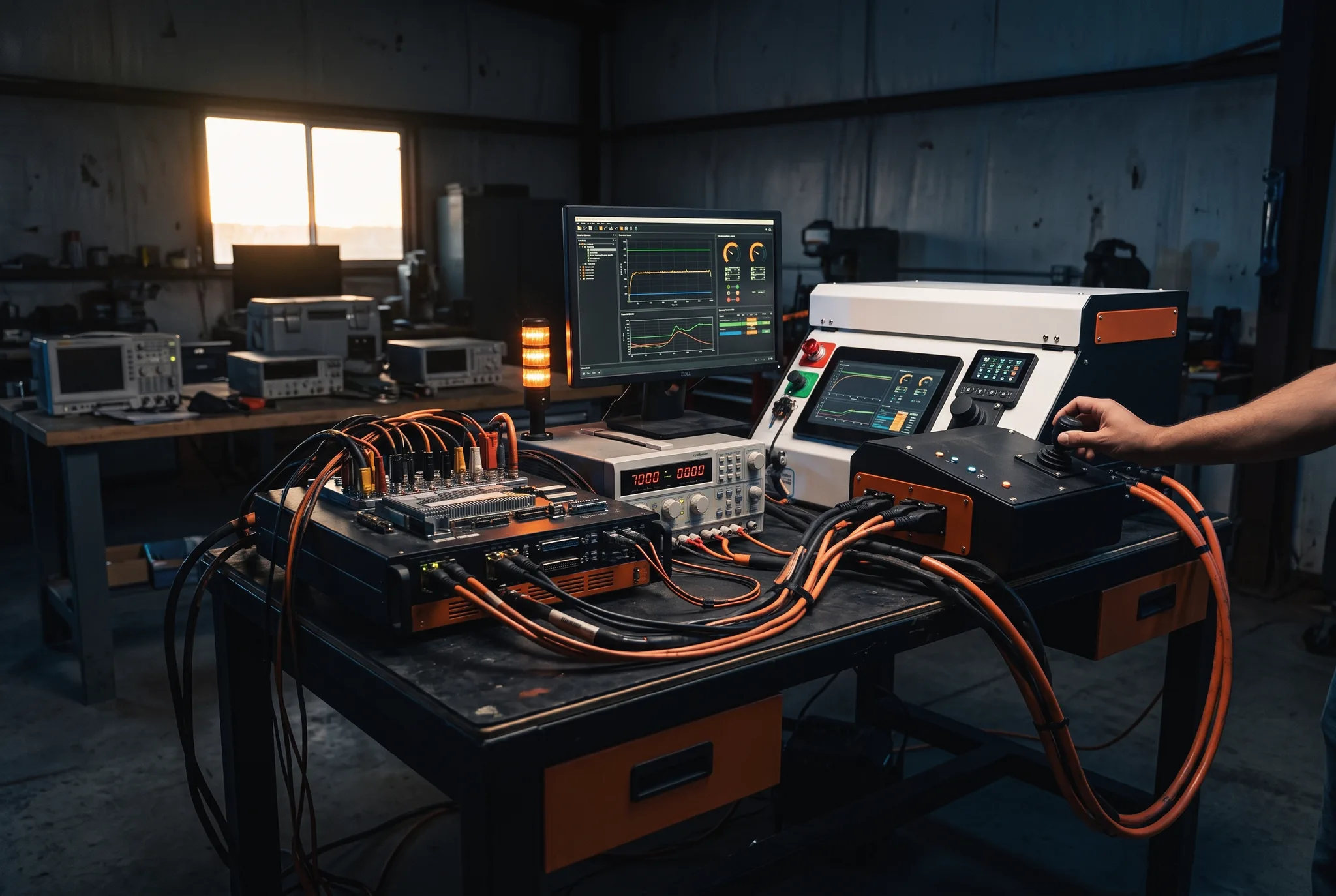
Envoltz builds controls hardware of its own design, with an Envoltz BMS, a peripheral MCU, and a system start block in development alongside the platform-agnostic DC-link power control unit. The software team and the board designers share a hallway, and it shows in the integration.
Want to write firmware that ships?
Small team, real ownership, hardware that reports back from the field.